
A STUDY ON INNOVATION AND ENTREPRENEURSHIP IN MODERN COMMERCE FOR SUSTAINABLE ECONOMIC DEVELOPMENT
September 30, 2026A STUDY ON INNOVATION AND ENTREPRENEURSHIP IN MODERN COMMERCE FOR SUSTAINABLE ECONOMIC DEVELOPMENT
September 30, 2026Sparkling International Journal of Multidisciplinary Research Studies
DETERMINANTS OF BANK PROFITABILITY AND PERFORMANCE: A CASE STUDY ON STATE BANK OF INDIA IN VISAKHAPATNAM
*Ande Keerthi Kailash Nath Babu, & **Sudheesh P. N.
*Student, IV Year, B.B.A., LL.B., Christ Academy Institute of Law, Bengaluru, India.
**Assistant Professor, Christ Academy Institute of Law, Bengaluru, India.
Abstract
The current study attempts to identify the major factors determining the performance and profitability of the State Bank of India (SBI), which is the biggest public sector commercial bank in India. Using a mixed-methods empirical design, the study draws on secondary panel financial data and primary findings from surveys of branch managers in Visakhapatnam. The results show that internal operational drivers, including net interest income from credit lending and operational efficiency, are major triggers for profitability in institutions. Non-performing assets (NPAs) are, however, the major structural challenge to asset quality and return metrics such as ROA and ROE. From an external perspective, the major challenges are macroeconomic instability, the interest rate environment, and regulations from the Reserve Bank of India (RBI). The analysis shows that digital transformation strategies, along with portfolio diversification through entry into high-yielding retail portfolios and fee-based advisory services, reduce operational costs considerably while stabilizing revenues. These findings suggest that SBI should prioritize operational efficiency, NPA control, digital transformation, and revenue diversification to strengthen profitability in practice and improve performance.
Keywords: banks, non-performing assets, state bank of india, and asset quality.
Introduction
The growth and sustenance of any nation economically are largely dependent on the state of its banking system. Banking institutions are essential for the development of an economy since they help in risk management, providing credit facilities, and performing financial transactions. The State Bank of India (SBI) is one of the leading banks in India, characterized by its large number of branches, huge customer base, and significant contribution to the economic development of the country. It is important for policymakers, investors, and other financial industry players to understand the factors that affect the profitability and performance of the bank. The profitability and performance of any bank are some of the most vital indicators of its financial health and the efficiency of customer services.
Review of Literature
Yuan, Deli et al. (2022) discussed their study entitled “Profitability determining factors of banking sector: Panel data analysis of commercial banks in South Asian countries”. In this study, they examined the factors that determine the profitability of the banking sector. They found that debt-to-asset ratio (DAR), bank size (BS), and return on assets (ROA) in terms of particular variables in the banks are all positive and significant. It has been found that banks possess negative and significant Deposit to Asset Ratios (DTAR) and Loan to Deposit Ratios (LDR). There is neither a positive nor a negative impact on the Equity to Asset Ratio (EAR) and Debt to Equity Ratio (DER).
Zhang, Christine et al. (2011) in the study entitled “Determinants of Bank Profitability: Evidence from the U.S. Banking Industry,” identify the determinants of bank profitability in the U.S. banking industry. This paper analyzes the profitability of the US banking sector from 2000 to 2008 using the ordinary least squares regression technique. Macroeconomic variables and individual bank attributes affect the profitability of our banks. The findings show that bank attributes, apart from size, are strongly and positively related to bank performance, consistent with previous literature. The impact of size variables depends upon the size category of the banks.
Hossain Saimum Md, Ahamed Faruque (2015) in the study titled “Determinants of Bank Profitability: A Study on the Banking Sector of Bangladesh, ” analyse the effects of bank-specific factors on the profitability of banks in Bangladesh from 2012- 2016. The top 15 traditional private commercial banks are selected based on asset size for this study. The Annual Reports of 2012-2016 are used to collect the empirical data of the banks. The relationship between the variables through regression analysis is done using the fixed-effect model. The analysis found that two earnings factors (TIN and NII), asset quality (NPL), capital strength (CAP), management efficiency (OPEX), industry impact (SIZE), and asset structure (DPST) were significantly associated with ROA. For ROE, industry impact, capital strength, and earnings factors were positively associated. Among the significant predictors, only NPL was negatively associated with ROE.
Nicolae Petria et al. (2015) “Determinants of Banks’ Profitability: Evidence from EU 27 Banking Systems,” examines the main determinants of EU27 banks’ profitability from 2004 to 2011. There are two major groups of factors that influence the bank’s profitability – internal and external ones. The first group includes bank-specific variables, while the second one comprises industry- and macroeconomic-specific factors. Bank profitability is measured through such indicators as the return on average equity (ROAE) and return on average assets (ROAA). The predicted results match the empirical data. Credit and liquidity risks, efficient management, diversification of firms, market concentration and competition, and economic growth influence bank profitability in terms of ROAA and ROAE. The interesting and important result is that bank profitability is positively influenced by competition in the EU27.
Staikouras K. Christos and Woodod E. Geoffrey (2004) in the research article “The Determinants of European Bank Profitability,” indicate that many variables influence the rate of return a financial institution earns. These variables include the unique nature of each financial organization as well as several external factors that impact profit generation. The type of explanation chosen has policy implications and must be handled with care. This article classifies the factors affecting bank profitability and analyses the literature surrounding bank performance studies. In the second part of the article, the contribution of the dynamic reallocation effects (external factors) and inside effects (internal factors) to the overall performance of the EU banking industry during the years 1994 to 1998 is calculated. We construct OLS and fixed-effects models, and the results present a new perspective on how changing competition impacts the performance of the EU banking industry.
Research Gap
Although various factors that influence the profitability of banks have been extensively studied and researched before, there is a need for a comprehensive understanding of such factors in light of the rapidly changing environment of the Indian banking industry. Profitability studies usually involve analysis of private banks and do not take into account the specific challenges faced by public organizations, including SBI, that have to find the right balance between profitability and social responsibility. Through analysis of the factors influencing the profitability of SBI under the existing economic situation, this paper aims to bridge this gap in research.
Relevance of the Study
The analysis of the various factors influencing bank performance and profitability in the form of a case study of SBI cannot be considered irrelevant at all in the present state of the economy. The study focuses on the interdependence of various factors that definitely influence the financial stability of a bank, such as interest rates, loan portfolio quality, and efficiency. It becomes particularly important to understand all the factors in the current situation when there is rapid development in technology, increased competition in the field of banking, and economic instability.
Research Questions
The research questions of this study are: –
- What are the determinants that influence the profitability of the banks, in particular State Bank of India?
- How has SBI’s recent performance been like?
- What are the tactics and actions SBI has implemented to boost its profitability?
Objectives of the Study
The research objectives of this study are: –
- To identify the determinants that influence the profitability of the banks, in particular State Bank of India in Visakhapatnam.
- To analyze the performance of SBI in recent years.
- To explore the tactics and actions SBI has implemented to boost its profitability.
Research Methodology
By adopting a mixed-methods research design involving both quantitative and qualitative data collection techniques, the State Bank of India (SBI) in Visakhapatnam was studied. The case was analysed to identify the factors that drive bank performance and profitability. This involved sending out a standardized questionnaire via Google Forms to collect primary data from the SBI branch manager. The rationale for doing so is to obtain managerial perceptions about certain variables like asset quality, management efficiency, market dynamics, and others that influence performance and profitability.
Hypothesis
Null Hypothesis (H0): A higher loan-to-deposit ratio has a negative impact on SBI’s profitability.
Alternative Hypothesis (H1): Increased investment in digital banking solutions will lead to a positive change in SBI’s profitability.
Discussion
1.To identify the determinants that influence the profitability of the banks, in particular State Bank of India, in Visakhapatnam
There are certain determinants of profitability in the State Bank of India (SBI), which can be classified under the headings of internal and external. According to the survey, the most important determinants of profitability are:
Internal Determinants
Interest income from loans: SBI’s key source of revenue and one of its drivers of financial performance. As per the views of the survey respondents, interest income generated through loans accounted for 66.7% of those who considered interest income most influential on profitability. This finding is consistent with the view that interest income is an indispensable element for banks’ functioning and profitability.
Operational Efficiency: The ability of SBI to efficiently manage its operating expenses is critical. As per the survey conducted, 66.7% of the respondents feel that SBI manages its operating expenses either very well or effectively. Efficient management of operating costs could help in generating higher profit margins.
Non-Performing Assets (NPAs): It is a major concern for SBI that it makes provisions for NPAs, and this affects its bottom line. All the respondents agreed that NPAs were the most significant challenge to maintaining profitability. Higher NPAs lower the profit margin and show poor quality of assets.
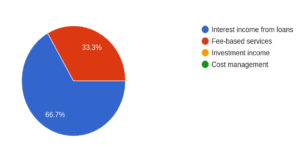
Fig. 1 Internal Determinants
External Determinants
Economic Conditions: The overall economic environment has a major effect on the profitability of SBI. As stated in the survey results, the most significant external factor affecting profitability is the economic environment, and 66.7% of the respondents chose that answer. An economic slowdown could result in increased instances of defaulted loans.
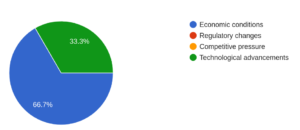
Fig.2 External Determinants
Regulations: The operations and profitability of SBI can be affected by RBI regulations. The profit margin could be affected by the considerable number of resources required to meet the regulatory requirements.
Competition: There is intense competition in the Indian banking sector from many private and foreign banks vying for market supremacy. Profitability could be affected by the ability of this competition to exert pressure on fees and interest rates.
2.To analyze the performance of SBI in recent years.
In spite of the difficulties, including high levels of non-performing assets and regulatory requirements, SBI has proved resilient when it comes to its financial performance. This is due to the adoption of digital transformation strategies that have resulted in increased profitability metrics.
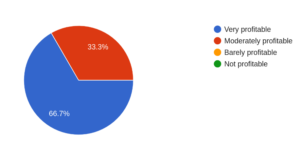
Fig.3 The performance of SBI in recent years
Financial Metrics
Return on Assets (ROA) and Return on Equity (ROE): The two most important performance ratios of a bank are ROE and ROA. The ROA and ROE of SBI have improved over the past few years, indicating that the bank has been using its capital efficiently.
Net Interest Margin (NIM): Despite fluctuations in the rate of interest, SBI’s NIM has stayed constant, which implies that SBI has been successful in handling its interest income.
Asset Quality: Although there has been improvement in the case of NPAs, it is still a concern for SBI. Positive results are now visible in the efforts taken by the bank to manage its asset quality.
3.To explore the tactics and actions SBI has implemented to boost its profitability.
A number of strategies have been employed by SBI to enhance its performance, including the following:
Strategies in Digital Banking: This financial institution has invested heavily in digital banking, and this has led to an increase in consumer satisfaction and cost reduction.
Customer Satisfaction Programs: SBI has focused on enhancing the service provided to customers since it has been noted that customer satisfaction is an important determinant of SBI performance. 66.7% of the participants in the research indicated that customer satisfaction has a strong effect on the performance of SBI.
Strategies in Cost Management: It has been possible for SBI to reduce costs through effective management of its operations.
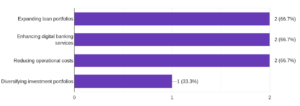
Fig. 4 The tactics and actions SBI has implemented
Tactics and Actions to boost profitability: The SBI has employed diverse ways of increasing profitability, all of which are in agreement with current market demands and technology advancements.
Digitalization: Based on the results of the survey, all the respondents (100%) are of the opinion that digitalization will have a considerable effect on the profitability of the SBI. The following are some of the digital initiatives of the SBI:
- Mobile banking applications: Enhancement of client access and satisfaction.
- Automated Services: Employment of AI and machine learning technology to reduce costs.
Expansion of Loan Portfolios: The major focus of SBI has been on expanding its loan portfolio by introducing loans like business, home, and personal loans. A significant emphasis on loan portfolio growth as a way of increasing profitability was observed during the research process.
Improving Fee – Based Services: Besides, SBI has also been making efforts to improve its fee-based services that may create an independent source of revenue for the bank outside of interest income. Banking service charges as well as advisory services fall under this category.
Risk Management: SBI has managed to strike a perfect balance between risk and profitability through effective risk management practices. As per the results obtained from the survey, 66.7% of respondents feel that SBI effectively manages risks, which is very important for the sustainability of profitability.
Findings
Most of the respondents considered the profitability of SBI very high. Interest from the income loan plays the biggest role in determining the profitability of SBI. Customer satisfaction plays an extremely important role in the performance of State Bank of India. The external environment includes the economic situation and technological development, which affect the profitability of State Bank of India. Non-Performing Assets (NPAs) play the most significant role in SBI’s profitability.
Conclusion
The ability of the State Bank of India (SBI) to earn interest from loans is a critical element that plays a significant role in the profitability of the institution for several participants. Despite challenges such as NPAs and the economic environment, SBI has demonstrated resilience, highlighting the importance of effective loan management and a strong lending strategy. Digital transformation efforts on behalf of the institution are another critical element that will have an impact on its future profitability.
In a bid to ensure competitiveness in the future, the SBI will ensure continued investment in digital channels that will not only improve the overall customer experience but also reduce costs and streamline operations. Another way in which the SBI is ensuring continued profitability in the future is through increased focus on growing its loan portfolios and diversifying sources of income. This bank is well-placed to thrive in the future due to its strategies on innovation, customer satisfaction, and risk management.
References
Hossain Saimum Md, Ahamed Faruque. (2015). Determinants of Bank Profitability: A Study on the Banking Sector of Bangladesh. Journal of Finance and Banking, 13(1&2), 43-57.
Nicolae Petria, Bogdan Capraru, & Iulian Ihnatov. (2015). “Determinants of Banks’ Profitability: Evidence from EU 27 Banking Systems”, Procedia Economics and Finance, 20, 518-524.
Staikouras K. Christos, & Wood E. Geoffrey. (2004). The Determinants of European Bank Profitability. International Business & Economics Research Journal, 3(6), 57-68.
Yuan, Deli et al. (2022). Profitability determining factors of banking sector: Panel data analysis of commercial banks in South Asian countries. Frontiers in Psychology, 13, 1000412.
Zhang, Christine, and Liyun Dong. (2011). Determinants of Bank Profitability: Evidence from the U.S. Banking Sector. [Research project, Simon Fraser University]. CORE. https://core.ac.uk/download/pdf/56377207.pdf
To cite this article
Ande Keerthi Kailash Nath Babu, & Sudheesh P. N. (2026). Determinants of Bank Profitability and Performance: A Case Study on State Bank of India in Visakhapatnam. Sparkling International Journal of Multidisciplinary Research Studies, 9(3), 1-8.